
Circuit Breaker Selection Guide
A circuit breaker is the fuse of the system it protects; if chosen incorrectly, it either shuts down production with unnecessary trips or fails to isolate the circuit in time in the event of a fault, causing damage to equipment or even personnel. In this guide we discuss the engineering logic behind the selection of a circuit breaker; critical parameters such as rated current, breaking capacity, trip curve, and coordination; and explain how a circuit breaker works in conjunction with a protection relay and a signaling chain. Our goal is not to provide a ready-made list, but to give you a framework to make the right decision for your application.
Whether you are designing a panel or upgrading an existing protection system, you need to clarify what you are protecting and under what conditions before selecting the right device. Let's start with the basics.
What is a Circuit Breaker and What is the Difference from a Fuse?
A circuit breaker is a protective device that automatically opens the circuit in the event of an abnormal condition, such as an overload, short circuit, or leakage current, and can be manually or remotely reset after the fault has been corrected. The key difference between a fuse and a circuit breaker is that a fuse blows once and must be replaced; a circuit breaker, on the other hand, is reusable, adjustable, and in most cases can report its status (open/closed) to a control system.
This reporting capability takes the circuit breaker out of being an isolated device on a modern panel and makes it part of a broader protection architecture. The auxiliary contact of a breaker feeds into a protection relay; signals from the measurement transformers are isolated and a logic layer sends an enable command to the breaker. In this chain, the signal is expected to be clean, isolated, and reliable; reed relays and signal relays come into play precisely at this point.
Another important distinction is the scope of protection. While insurance only responds to excessive current, circuit breaker types can combine overload, short circuit, and leakage current (alternating current) protection in a single enclosure. This results in fewer devices in the panel, cleaner wiring, and faster recovery after a fault. The ability to reclose directly shortens the downtime in shift-operated facilities.
Thermal, Magnetic, and Thermal-Magnetic Switching
A classic circuit breaker has two tripping mechanisms in one. Thermal mechanism, which works by heating and bending a bimetallic strip over a long period of overloading; it provides a slow and current-dependent delay. Magnetic mechanism, which opens the circuit in milliseconds in case of a short circuit or high surge currents. Most miniature circuit breakers (MCBs) are of the thermal-magnetic type. In more sensitive applications, the tripping decision is made by a separate electronic protection relay and the circuit breaker only performs the switching function.
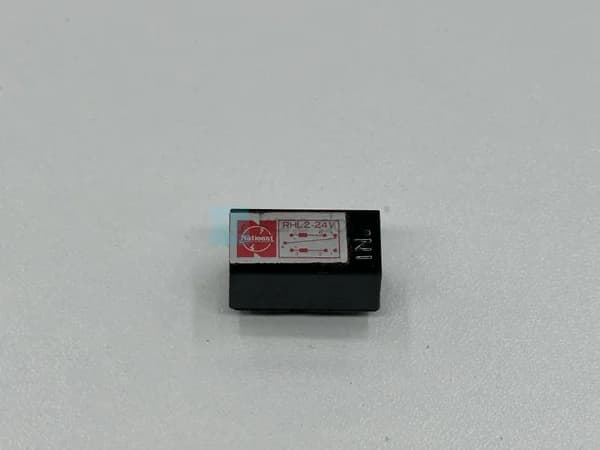
 Reed relays provide clean switching in signal circuits and protection chains — National Rhl2-24v Reed Relay
What Parameters Should Be Considered in Switch Selection?
Selecting the right switch involves balancing several interrelated quantities. The following parameters are decisive in almost every application:
- Rated current (In): The current that the circuit breaker can continuously carry. It should be selected above the load current, but below the carrying capacity of the cable cross-section; otherwise, it only protects itself, not the protection cable.
- Rated voltage and pole number: Single-phase, three-phase, or DC system; each requires a different pole arrangement and voltage class. In DC circuits, the type of circuit breaker is especially important because it makes arc extinction more difficult.
- Switching capacity (Icu/Ics): The maximum short-circuit current that the switch can safely handle. A value below the possible short-circuit current of the installation may cause the device to explode during a fault.
- Switching curve (B, C, D): Determines at which current level the magnetic switch will engage. The B curve is preferred for lighting, the C curve for general use, and the D curve for motors and transformers with high starting currents.
- Environmental conditions: Temperature, vibration, and humidity; requires derating of the rated current. The effective switching capacity of the switch decreases above 40 °C.
All of these parameters define the window between the circuit you are protecting's current carrying capacity and the possible fault current. A good choice is to target the exact center of this window.
Comparison of Switching Curves
The following table summarizes the typical magnetic switching ranges and applications for the most common switching curves. The values are typical based on standards; the final selection should always be made based on manufacturer's data.
| Opening Line | Magnetic Opening (In solid) | Typical Application |
|---|---|---|
| B | 3 – 5 × In | Lighting, resistive loads, long-wire residential circuits |
| C | 5 – 10 × In | General purpose circuit breakers, small inductive loads |
| D | 10 – 20 × In | Motors, transformers, high current inductive loads |
Why are Protection Relays and Signaling Chains Important?
In large power systems, the circuit breaker does not make decisions on its own. Measurements from current and voltage transformers are processed by a protection relay, which evaluates conditions such as excessive current, ground faults, phase imbalance, and issues a trip command to the breaker when necessary. In this architecture, reliability is directly dependent on the quality of the contact carrying the trip command.
This is why signal relays, and especially reed relays, are important. Mercury-wetted reed relays virtually eliminate contact bounce, which prevents false triggering in high-speed counting, sensitive timing, and test systems. The C.p. Clare Mrmd-15053 Mercury-Wetted Reed Relay and C.p. Clare Mrmd-15130 Mercury-Wetted Reed Relay are preferred in protection and measurement circuits that require stable contact resistance. For dry-contact types, the C.p. Clare Mrme-15003 Microclareed Relay is a compact option.
 Mercury-wetted reed relays provide bounceless switching in the protection relay chain — C.p. Clare Mrmd-15053
The coil voltage of reed relays is another detail that is often overlooked in selection. A coil suitable for the logic voltage of your control system should be chosen; for example, in a 24 V control line National Rhl2-24v Reed Relay, and in 6 V compact circuits, models such as Elfein 802-1g9-6v Miniature Reed Relay provide functional compatibility. You can access these components and more in Kare Dalga's Relay & Circuit Breaker category.
Practical Steps for Selection and Coordination
While putting theory into practice, the following step-by-step approach eliminates most selection errors:
- Specify the load: Continuous current, starting (starting) current and load type (resistive, inductive, capacitive) are determined.
- Calculate the short-circuit current: The maximum possible short-circuit current at the connection point is found; the Icu value of the circuit breaker must be above this value.
- Select the Anma current and curve: The In and opening curve are determined based on the cable capacity and load profile.
- Ensure selectivity: Coordination between successive circuit breakers ensures that only the circuit breaker closest to the fault remains open, while the upper level remains in operation.
- Design signaling and remote monitoring: Status information is transferred to the control system via auxiliary contacts, protective relays, and signal relays.
Selectivity, especially in installations where uninterrupted operation is critical, is achieved not only by the cutting selection, but also by the gradation of the opening characteristics. In practice, selectivity is achieved both in terms of current and time; the opening curve and delay of the upper stage switch is selected so that it exactly coincides with that of the lower stage. In some cases, this is verified not only by the device values, but also by looking at the selectivity tables published by the manufacturer.
Finally, consider the life cycle of the protection system. Thermal-magnetic circuit breakers generally require no maintenance; however, the relay contacts in the measurement and signaling chain wear out, depending on the number of switching operations and the type of load. Adding appropriate snubbers or damping circuits to reduce contact wear in inductive loads extends the life of both the circuit breaker and the signal relays. Designing the protection chain as a whole is often more decisive than selecting individual devices with the best values.
 Compact reed relays are ideal for low-voltage signaling in tight panels — Elfein 802-1g9-6v
Frequently Asked Questions
Which one should I choose between a circuit breaker and a fuse?
If reusability, adjustable protection, and status monitoring are required, a circuit breaker is preferred. A fuse is simpler and lower in cost, but it must be replaced after each trip. In industrial and critical facilities, circuit breakers have become almost standard.
Why is the breaking capacity (Icu) so important?
Icu is the highest short-circuit current that the circuit breaker can safely interrupt. If the facility's potential fault current is higher than this value, the circuit breaker cannot interrupt the current during a fault and may cause physical damage. Therefore, Icu should always be selected above the calculated short-circuit current.
Does a protection relay replace the circuit breaker?
No, they perform different functions. The protection relay is the brain that detects the fault and makes the decision; the circuit breaker is the body that physically cuts off the current by implementing that decision. In large systems, these two work together as a chain connected by signal relays.
What is the role of reed relays in protection circuits?
Reed relays provide clean, fast, and isolated switching in the protection and signaling chain. In particular, mercury-immersed types eliminate contact bounce, preventing false triggering in applications requiring precise timing and counting, which increases the reliability of protection logic.
Summary and Finding the Right Components
Circuit breaker selection is an engineering decision that considers the rated current, breaking capacity, opening curve, and selectivity together. Designing the device not only alone, but with the protective relay and the signaling chain, directly affects both safety and system continuity. Once the correct parameters are determined, the next step is to procure reliable components that will complete this architecture.
In the Kare Dalga catalogue; National, C.p. Clare and Elfein like brands' reed and signal relays with components for protection and switching applications can be found together with a B2B supply understanding. To review products suitable for your project's protection chain and receive a quote, visit the Relay & Circuit Breaker category; when you share your application details, we can determine the most suitable option for your engineering needs together.