
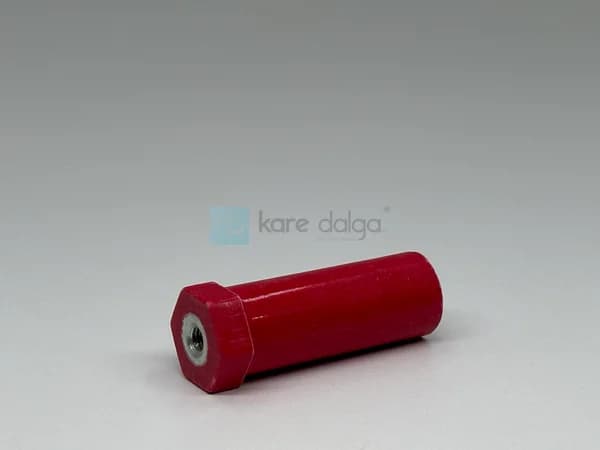
Insulator (Isolator) Guide: Signal and Power Isolation
If you have struggled with unwanted parasites in a measurement circuit due to ground loops, or if you have had to safely transfer high-voltage power from a bar to a low-voltage control board, an insulator is an insulator, a component that transmits a signal or energy from one circuit to another, either magnetically, optically, or capacitively, while breaking the electrical continuity between the two circuits. In this article, is not an insulator,, galvanic isolation is required, Signal isolation We examine the differences between power and isolation, the parameters to consider when selecting the right component, and the most common application scenarios in the industry from an engineer's perspective. Our goal is to provide a solid reference to help you set up the isolation busbar correctly in your next project.
What is an insulator?
An insulator is a component that allows the transfer of information or power between two electrical circuits without a direct conductive link (metal path). A galvanic barrier is established between the circuits; that is, there is no copper path for current to flow directly between the primary and secondary sides. Signals or energy are carried across this barrier by an indirect mechanism, such as a magnetic field (transformer/voltage transformer), light (optocoupler), capacitive field, or magnetic resistance change (magnetic insulator).
In practice, insulators perform two basic functions: first, they separate circuits with different reference potentials ground loops cuts the common-mode noise; secondly, it prevents a fault on the high-voltage side from propagating to the low-voltage control/measurement side, thus ensuring both operator safety and the protection of sensitive electronics. In industrial measurement panels, current and voltage insulators reduce and isolate high values on the bar to levels that can be safely handled by measuring instruments and PLC analog inputs. The insulator components in the square wave catalog perform exactly this function of a secure interface.
Viewing the insulator as a simple "isolator" can be misleading. A well-designed insulation barrier is part of the circuit topology: it consciously separates reference potentials, does not leave a path for noise currents, and improves EMC behavior across the system. Especially in multi-card systems, having each sub-circuit have its own local ground and only bridging these grounds via the insulator prevents parasitic currents from reaching the measurement lines. Therefore, the choice of insulator must be considered a design decision along with the circuit board layout and grounding strategy.
 MBS Ag C0/p60 90084 750V insulator designed for in-panel galvanic isolation.
How does galvanic isolation work?
Galvanic isolation is based on the principle that there is no common path of current between the two circuits. Energy or information is transferred by field coupling through a physical barrier (insulating film, air gap, insulation around a magnetic core). Depending on the coupling method used, there are four main approaches:
- Magnetic (inductive) coupling: Transformers and current/voltage measurement transformers fall into this category. The changing current in the primary winding creates a magnetic flux in the core; the flux is converted into a proportional signal in the secondary winding. This is the most common method for AC signal and power transfer.
- Optical coupling: In optical couplers, the light produced by the LED is detected by a photo-detector. It is ideal for digital signals and fast switching commands.
- Capacitive coupling: The changing electric field is transferred through the insulator between the two plates; it is preferred for high data rates in modern digital insulator integrated circuits.
- Magnetic-resistive/digital magnetic coupling: High speeds and long lifetimes are targeted with micro-scale coils or magnetic sensors.
Two concepts that determine the quality of the barrier creepage (distance from the surface) and clearance (space between the parts) distances are determined by standards such as IEC 60664, based on operating voltage, degree of contamination, and overvoltage category. The breakdown voltage of the insulation is typically expressed in terms of a one-minute shock or AC test voltage (e.g., in kV), and is one of the most critical parameters in component selection.
What is the difference between signal insulation and power insulation?
Signal insulationis aimed at low-power applications that carry information: 4-20 mA current loops, RS-485/CAN communication lines, temperature and pressure sensor outputs, encoder feedback signals. The priority here is to reject common-mode noise without compromising signal integrity and to maintain measurement accuracy. Current and voltage measurement transformers are the representatives of this category on the industrial panel side, as they convert the high value in a bar to an isolated measurement signal that is proportional.
Power isolation applications are primarily aimed at transferring energy: separation of supply lines with isolated DC-DC converters, isolation of gate power supplies on driver cards, separation of the patient side from the network in medical devices. Here, efficiency, current carrying capacity, and thermal behavior are emphasized. The two worlds complement each other: in a typical industrial driver, an isolated converter that supplies the power side and an insulator that separates the measurement signals are found together. For power side solutions, the insulator category along with the signal isolation components.
 For applications requiring high withstand voltage, MBS Ag Cpe100 900149 8kV insulator.
What Parameters Should Be Considered When Selecting an Insulator?
When determining the correct insulator, the question of "how many volts" is not enough. The following parameters must be considered in conjunction with the operating conditions of your application:
- Insulation (withstand) voltage: It must be selected with sufficient margin, taking into account the continuous operating voltage and possible surge voltages. The MBS insulators in our catalog cover a wide range from 600V to 8kV.
- Signal type and bandwidth: Analog measurements ranging from DC to several hundred kHz and high-speed digital communication require completely different coupling technologies.
- Accuracy and linearity: In measurement transformers, the class value and phase error directly affect system performance in energy measurement and protection applications.
- Creepage/clearance and degree of contamination: In humid, dusty or chemical environments, surface leakage distances become critical.
- Thermal limits and environmental conditions: Operating temperature range, mounting style, and vibration resistance are particularly important in industrial and moving platforms.
- Mounting and form factor: Ray (DIN) mounting, in-panel placement, and busbar geometry compliance directly affect the time to commissioning.
In light of these criteria, models such as the MBS Ag Co/p35 90075 600V insulator and MBS Ag Co/p40 90078 600V insulator are a balanced starting point for medium voltage measurement applications. For panels requiring higher withstand voltage, the MBS Ag Cs/p35 90091 1kV insulator may be preferred. All MBS products can be evaluated within a single brand quality framework.
Comparison of Insulator Types
The following table summarizes the typical applications and strengths of the four basic insulation coupling methods. When making the right selection, consider the signal/power nature and speed requirements of the application together.
| Coupling Method | Typical Application | Strengths | Note: |
|---|---|---|---|
| Magnetic (transformer/measurement transformer) | AC power, current/voltage measurement | High withstand voltage, power transfer | DC non-conductive, size |
| Optical (optocoupler) | Digital signals, gate driving | Simple, common, inexpensive | Speed and lifetime limit (LED aging) |
| Capacitive (digital insulator) | High-speed data lines | High data rate, low power | Coaxial temporary shock resistance |
| Magnetic digital | Industrial communication | Long life, high speed | Cost, external field sensitivity |
insulators In Which Applications Are They Used?
Insulation components are found in almost every industry where safety and measurement integrity are critical:
- Power distribution and panel systems: Current/voltage measurement transformers, meters, and protection relays are isolated from the bus.
- Industrial automation: PLC analog inputs/outputs, motor drives, and field sensors prevent ground loops.
- Medical devices: By disconnecting the end of the line, it ensures compliance with leakage current limits.
- Renewable energy and EV: It establishes a barrier between high voltage and control electronics in inverters and charging systems.
- Railway and mobile platforms: In equipment operating under vibration and wide temperature ranges, isolated measurement and communication interfaces directly affect system reliability.
- Test and laboratory setups: In measurements disrupted by the ground difference between devices, the insulator provides a clean reference separation, resulting in repeatable results.
The common thread in these applications is that insulation is a component that is often invisible but, when it fails, is the most costly. Selecting a measurement transformer with the wrong accuracy class can result in an energy bill discrepancy, and selecting an insulation barrier with an inadequate voltage margin can lead to chain device damage. Therefore, dimensioning the component from the outset is always more economical than correcting it later with field intervention.
In medium/high voltage panels requiring high insulation voltage, models such as the MBS Ag Cs/p40 90093 1kV insulator are preferred for both measurement accuracy and safe separation. We can determine the appropriate model for your application based on its voltage class and accuracy requirements.
Frequently Asked Questions
Is an insulator the same as a transformer?
No, but they are related. A transformer is a magnetic component that focuses on converting voltage/current levels; insulation is a by-product of this. An insulator, on the other hand, is a component whose primary function is to electrically isolate two circuits, and it can perform this function through magnetic, optical, or capacitive means. Measurement transformers are a special sub-class that combine both conversion and insulation functions.
Why is galvanic isolation necessary?
For two main reasons: safety and signal integrity. From a safety perspective, it prevents high voltage from reaching the operator or sensitive electronics. From a signal perspective, it maintains measurement accuracy by eliminating ground loops and common-mode noise that result from different ground references.
How do I determine the isolation voltage?
In addition to the continuous operating voltage, you must also take into account the transient overvoltages (surge, switching) that may occur in the system. Typically, a significant safety margin is left above the operating voltage, and creepage/clearance distances are provided to match the overvoltage category (OVC) and the degree of contamination.
Does signal isolation degrade measurement accuracy?
When selected correctly, it actually improves accuracy. A properly rated measurement transformer or insulator suppresses noise and transmits the true signal more cleanly. Incorrect band width or selection of a low accuracy class can result in phase errors and linearity deviations; therefore, it is important to select the model that is appropriate for the application.
Summary and Next Step
insulators are the cornerstone of both safety and measurement reliability in modern electronics and energy systems. To choose the right component, it is necessary to consider everything from insulation voltage to signal type, from accuracy class to environmental conditions. Signal isolation carries information, while power isolation transfers energy; in most real systems, the two work together. To determine the model that best suits your project's voltage class and accuracy requirements, you can review the MBS products in the insulator category, and request a quote from our team along with your application details. Let's establish the right isolation architecture together.