
Is Buying Used and Refurbished Test Equipment a Good Idea?
When encountering the list price of a new Fluke 87V or a laboratory oscilloscope, most engineers inevitably hesitate: with the same budget, it seems possible to purchase two, or even three, used test instruments and equip the entire team. But is buying a refurbished multimeter or a used oscilloscope really a sensible engineering decision, or does it mean compromising on measurement accuracy? In this article, we base the purchasing decision on technical criteria: the real difference between used and refurbished devices, why calibration is not a subject for negotiation, which classes of devices age well in the used market, and the questions you should ask before making an offer. The goal is not to push you towards the "cheap" or "expensive" side, but to ensure you correctly calculate the total cost of ownership and measurement risk.
What is the Difference Between a Used and a Refurbished Test Equipment?
These two terms are often confused in everyday language, but there is a significant gap between them in terms of purchase risk. Used equipment is the equipment taken over from the previous owner as is, without any technical intervention; the phrase "working" usually relies on the seller's observation. Refurbished equipment, on the other hand, is the equipment that has been cleaned, had its worn-out parts (battery cover, probe jacks, fan, capacitors) replaced, passed a functional test, and in most cases, recalibrated.
The difference between them is particularly critical in measurement devices. A multimeter's input protection circuit or an oscilloscope's vertical gain calibration is not visible to the eye; it only becomes apparent when tested under load and against a reference. Therefore, from an engineering perspective, the correct question is not "new or used", but "has the measurement chain of this device been validated against a traceable reference?"
What documents should you request?
- Calibration certificate: A document preferably referencing a traceable reference, including the date and measured values.
- Function test report: Record showing that all measurement modes (V, A, Ω, capacitance, frequency) are working.
- Visual status record: Photos of the display, keypad, jack, and enclosure.
- Warranty/return condition: It is reasonable to expect a limited warranty on refurbished devices.
 Performing True RMS measurement Fluke 115 digital multimeter, with its robust input protection and simple menu, is a typical example of well-aged devices in the second-hand market.
When Does Buying a Second-Hand Test Equipment Make Sense?
Used equipment is a smart investment, not in every scenario, but under certain conditions. The strongest reason is the depreciation curve: professional test instruments can provide reliable measurement for years, even after production has ceased, but second-hand prices can drop below half of the new price. This situation is particularly meaningful in the following applications:
- Education and laboratory bench: Student laboratories, prototyping benches, and education sets do not require the latest generation features.
- Spare / secondary device: A backup that the field team carries with them to use while the primary device is being calibrated.
- Discontinued model need: If your current test procedure is tied to a specific model (e.g. a Fluke 77 IV or Fluke 79 III), finding the same model second-hand can be cheaper than changing the procedure.
- A specific application: For example, a Fluke 787 ProcessMeter if it will be used only a few times per year.
In contrast, in production line tests where the measurement result directly determines product quality or safety, a refurbished and certified device should be preferred, and equipment sold "as is" should be avoided.
 For years, the Fluke 77 IV and other established models have eliminated the cost of procedure changes in second-hand purchases because they adapt to your existing test procedure.
How do you calculate the Total Cost of Ownership (TCO)?
The true cost of a second-hand device is not just the label price. To make a fair comparison, add up the following items: purchase price, initial calibration before commissioning, possible probe/insurance/battery replacement, and periodic calibrations to be performed over the expected lifetime of the device. Dividing this total by the number of service years you expect from the device gives you the annual true cost. In most cases, the annual cost of a robust handheld multimeter is significantly lower than that of a zero-cost device, because these devices are mechanically simple and have a long service life. However, hidden costs in devices that require software licenses or special modules can quickly drive up TCO.
Calibration and Traceability: A Non-Negotiable Topic
The value of a test instrument depends on the accuracy of the number it displays; the only mechanism that guarantees this accuracy is observable calibration. A second-hand device may appear physically perfect, but over the years, the reference voltage source in digital multimeters drifts, the shunts age, and the vertical gain and time base in oscilloscopes drift. These are invisible, and can only be detected by calibration.
An uncalibrated measurement instrument produces a result that you "don't know is wrong"; this is more dangerous than not making a measurement, because it gives you false confidence.
A practical approach is to add the cost of a calibration before putting the device into operation to the price you pay for the used device. Even when this "hidden cost" is included, the used device will usually be below the new price; moreover, you will have a certified, reliable measurement instrument in your hands. For devices with a high accuracy class (e.g. True RMS models), it is also important to check the calibration range and the previous certification.
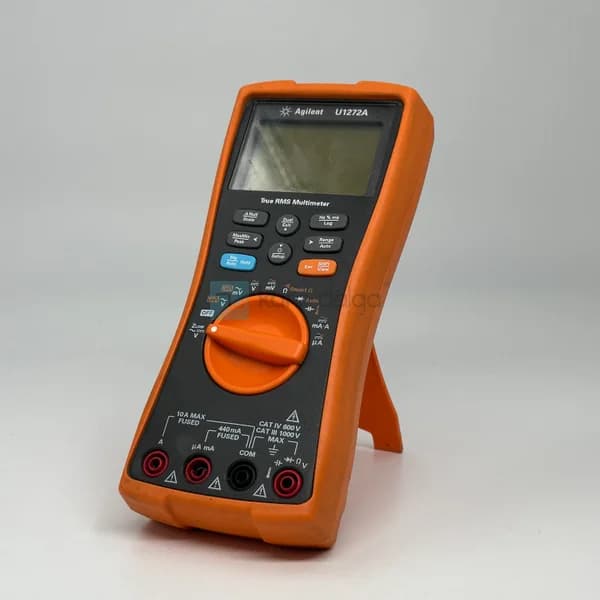
 High-resolution Agilent U1272A multimeter and other sensitive devices, always request a current calibration certificate after second-hand purchase.
New, Refurbished and Second-Hand: Quick Comparison
The table below summarizes the three purchase options in terms of engineering criteria. Each row provides a practical criterion to clarify your decision.
| Criterion | Zero (New) | Refurbished | Second Hand (As Is) |
|---|---|---|---|
| Initial cost | Maximum | Average | Minimum |
| Calibration status | Factory certified | Usually recalibrated | Unknown/none |
| Warranty | Full manufacturer's warranty | Limited warranty | Not applicable |
| Physical/electrical test | Production line QA | Functional testing performed | Customer's responsibility |
| Model derived from production | Usually not available | Available | Wide range of options |
| Total risk of ownership | Lowest | Low-moderate | High (verification requirement) |
Which Device Categories Thrive in the Second-Hand Market?
Not all test devices age at the same rate. Making a purchase decision based on the device's internal architecture and dependencies can largely prevent regret later on.
Devices that Thrive
- Handheld digital multimeters: Mechanically simple, low software dependency, parts are easily available. Fluke 15B like basic models and Fluke family of field multimeters, can provide reliable measurement for decades when properly calibrated.
- Passive/Analog Measurement Instruments: Devices such as pen ammeters, insulation testers have a low risk of technological obsolescence.
- Industrial Oscilloscopes: A model that meets your bandwidth needs, with a durable screen and front panel, will serve for a long time; mid-range models in the oscilloscope category offer a balanced price/performance in the secondary market.
Devices requiring attention
- Devices that are dependent on software licenses/updates: Some modern analyzers have features that are locked behind a license; these licenses may not be transferable when the analyzer is resold.
- Devices with built-in batteries/accumulators: Rechargeable batteries wear out over time; consider the cost of replacement.
- High-frequency/RF equipment: Since connector wear and calibration accuracy are high, extra care is required.
Frequently Asked Questions
Is a used multimeter safe?
Yes, when properly calibrated. The critical point is that the input protection circuit and fuses must be intact; in particular, make sure that the fuses and input resistors are original for high CAT-rated measurements. A device that has been calibrated and tested for functionality provides measurements as accurate as a new device.
Is a warranty provided for the refurbished test device?
Serious suppliers offer a limited warranty or right of return for refurbished devices. However, there is usually no warranty for second-hand devices sold "as is". Before purchasing, confirm the warranty period, scope, and whether a calibration certificate is included in writing.
Should I have the second-hand device recalibrated after purchase?
Yes, it is strongly recommended. You cannot know the past usage conditions of the device; drops, overloads, or long storage may have shifted the references. A calibration performed before commissioning ensures both measurement reliability and reveals the actual condition of the device.
Which is more sensible: one new device or two second-hand devices?
Depends on the criticality of use. For production QA or safety measurements, a single certified device is more reliable. For education, prototyping, or backup needs, two refurbished devices increase the team's measurement capacity and flexibility. Decide by calculating the total cost of ownership (device + calibration + potential repair).
Result: Second-Hand Makes Sense If You Ask the Right Question
Buying a used or refurbished test device is a risk if done blindly, but a smart engineering savings if done with awareness. The determining factor is not the age of the device, but that the measurement chain has been validated against a traceable reference. If you request a calibration certificate, perform a function test, and calculate the total cost of ownership correctly, a used multimeter or oscilloscope can seriously ease your budget.
In the Square Wave catalog, you can find a wide range of functionally verified Fluke multimeters, from mid-range measurement devices to more advanced models. You can explore the models suitable for your needs in the multimeter category , and for broader measurement requirements, you can take a look at the oscilloscope category . To get a quote and inquire about the status, calibration certificate, or stock information of the model you are looking for, please contact us