Test and Measurement Device: Rent or Buy?
When planning a budget for a test and measurement device, the first strategic decision that engineers and maintenance teams face is often a financial question, not a technical specification: equipment rental or purchase? In this article, we examine the balance between renting and buying equipment, from multimeters to oscilloscopes, thermal cameras to calibrators, from an engineering and total cost of ownership (TCO) perspective. Our goal is not to provide a ready-made recipe, but to offer a solid framework so you can make the right decision based on your project duration, usage frequency, calibration load, and cash flow.
The reason the decision is more layered than it appears is that a multimeter or oscilloscope is not just a single purchase item. There are hidden costs behind the device, such as periodic calibration, software updates, probe and accessory renewal, storage, and technological obsolescence over time. The right decision emerges when you put all these costs on the table.
What is test and measurement device rental, and when is it sensible?
Test device rentalmeans using the equipment for a certain period in exchange for a fee; the ownership and the device's calibration, maintenance, and obsolescence risks remain with the supplier. Rental is an attractive option, especially for project-based teams and organizations with fluctuating workloads, as it converts capital expenditure (CAPEX) into operating expenses (OPEX).
The typical scenarios where rental really comes to the fore are:
- Short-term or one-off projects: Buying a high-bandwidth oscilloscope for a few weeks of field commissioning work means the device will sit on the shelf for months afterwards.
- Peak capacity need: When you need more devices than you have on hand during production line expansion or a busy inspection season, rental provides a flexible buffer.
- Very expensive, niche devices: Equipment like high-frequency spectrum analyzers or power analyzers that are only used a few times a year.
- Trying before buying: When you want to see if a model fits your workflow before investing in it.
Rental also has a dark side: the accumulated rental cost over the long term can exceed the purchase price of the device, you won't have full control over your device inventory, and there's a risk of not being able to find the desired model when you need it critically.
The advantages and hidden costs of buying test equipment
Buying measurement equipmentgives you full ownership and the freedom to use it whenever and however you want. For teams that perform frequent and continuous measurements, the cost per use of an owned device decreases over time, often falling below that of rental. Ownership also means business continuity: external factors like supply delays, stock shortages, or rental period expirations won't halt your operations.
 A classic choice for field maintenance teams, the Fluke 115 True RMS digital multimeteris a good example of a device class where buying makes sense for daily intense use.
However, the purchasing decision encompasses much more than the tag price. The main items that enter into the total cost of ownership of a professional test instrument are:
- Periodic calibration: Most measurement devices need to be calibrated usually on an annual basis to maintain traceable accuracy. This means both a cost and downtime for the device during calibration.
- Accessory and probe replacement: Test probes, clamps, current pens, and fuses are consumable items that wear out over time.
- Software/firmware updates: Especially for PC-connected and data-logging devices.
- Storage and insurance: Storing devices in a secure, humidity- and temperature-controlled environment.
- Technological obsolescence: Even if a device is physically working, new standards or increased accuracy needs can make it functionally obsolete.
The good news is: robustly built industrial devices — such as Fluke class handheld multimeters — strengthen the purchasing side of the equation by spreading these costs over a very long usage period due to their long lifespan.
Rental vs. purchase comparison
The following table summarizes the key criteria influencing the decision, using two models. The assessments in the table are principle-based; you should concretize them using your own numbers.
| Criteria | Rental | Purchase |
|---|---|---|
| Initial cost | Low (OPEX) | High (CAPEX) |
| Long-term total cost | High in frequent use | Low in frequent use |
| Calibration responsibility | Typically at the supplier | At the user |
| Flexibility/model change | High | Low |
| Obsolescence risk | At supplier | At user |
| Instant availability | Dependent on stock/process | Always available |
| Ideal usage profile | Short project, peak load, niche device | Continuous, daily, core inventory |
How do you make the right decision? Usage intensity threshold
A practical rule of thumb for making the decision is based on usage intensity If you will be using a device for a large part of the year, on a weekly or daily basis, buying is almost always more economical; because rental fees increase in proportion to usage time, while the cost of a purchased device is fixed and the cost per use decreases continuously
Answering the following questions in order clarifies the decision:
- How many days of annual usage? Continuous usage above the threshold indicates a purchase
- Is the device core equipment or niche equipment? A multimeter that you need to have in your hands every day is core; a special analyzer that you need only twice a year is niche
- Who will be responsible for calibration and maintenance? If you don't have an internal resource, a rental that includes calibration can alleviate the burden
- How fast is the technology becoming obsolete? In rapidly changing fields, rental transfers the risk of obsolescence outside
- Do you have a cash flow constraint? Converting CAPEX to OPEX can provide breathing room within the budget year
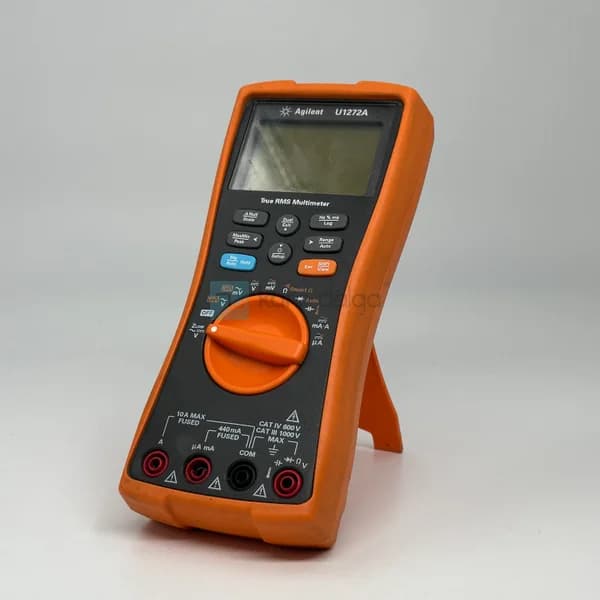
 In laboratory/AR-GE environments that require high resolution and data logging such as the Agilent U1272A True RMS multimeter advanced devices justify a purchase in continuous use
A hybrid approach is often the most intelligent: a multimeter, clamp meter, and basic oscilloscope for daily business to form the core of your inventory; rarely needed high-bandwidth oscilloscopes, power analyzers, or expensive thermal cameras are best rented on a project-by-project basis. This way, you can allocate capital to high-speed equipment and avoid the burden of aging and calibration for equipment you don't use frequently.
Thermal cameras and specialized devices: the balance of rental vs. purchase
In areas such as thermal imaging, the situation often favors rental. A thermal and industrial camerais worth purchasing only in facilities that have regular and frequent predictive maintenance programs, due to its high unit cost and rapidly evolving detector/resolution technology. For inspections performed a few times per year, rental provides access to the latest technology at an economical cost.
 Entry-level devices such as the Fluke 15B digital multimeter that meet basic measurement needs economically are clear examples of why they are worth purchasing to add to the inventory.
For those devices that fall between rental and purchase, a handy checklist
If you cannot make a clear decision between the two options, it is best to base your decision on concrete data. Follow these three steps: first, calculate the actual annual usage days of the device from records or estimates; then compare the total annual cost of the rental offer with the purchase price of the device plus annual calibration and maintenance costs; finally, assess how long the technology will last in your field and fit the amortization period into this window. These three numbers, in most cases, will make your decision clear on their own and avoid the costly mistakes made by intuitive estimates.
Frequently Asked Questions
Is it cheaper to rent or buy a test device?
The answer depends on the level of usage. For short-term, one-time, or peak-demand needs, renting is cheaper. If you use the device regularly throughout the year, the accumulated rental cost will exceed the purchase price, making it more economical to buy. Before making a decision, calculate the total cost of ownership (including calibration, maintenance, and depreciation).
How often should I calibrate the multimeter I purchased?
The general practice is to calibrate professional measurement devices once a year in a traceable laboratory. However, the correct period depends on the manufacturer's recommendation, the level of usage of the device, and the accuracy/standard requirements of your application. More frequent intervals may be required for critical measurements.
Which devices should I buy and which ones should I rent?
Purchasing commonly used devices such as multimeters, clamp meters, and basic oscilloscopes that form the basis of daily work; renting expensive, rarely used, or rapidly obsolete devices such as high-bandwidth oscilloscopes, power/spectrum analyzers, and thermal cameras on a project basis is the most balanced strategy for most businesses.
Why is it important to buy a True RMS multimeter?
True RMS multimeters measure the true effective value even in non-sinusoidal (distorted) waveforms. Average-responding devices give misleading results in environments where frequency drivers, switched power sources, and modern electronic loads are prevalent; therefore, buying a True RMS device for your core inventory is a long-term correct investment.
Summary and next step
There is no single correct answer to the question of whether to rent or buy; the correct answer is determined by your usage frequency, cash flow, calibration capacity, and the rate of technological obsolescence. A hybrid model based on purchasing core measurement equipment and renting niche and expensive devices establishes the healthiest balance between cost and flexibility for most engineering teams. When making your decision, look at the total cost of ownership, not just the tag price.
If you want to establish your core inventory, Fluke has proven models for field and laboratory use, including those for daily use: Fluke 77 IV digital multimeter and Fluke 79 III True RMS multimeter are durable classics; for service and commissioning work, the Fluke 787 digital multimeter Stand out. To select a device suitable for your needs or to get stock and quote check our multimeter category review; for your oscilloscope and thermal camera needs, we can determine the most suitable supply model together by contacting the square wave team at Kare Dalga.